


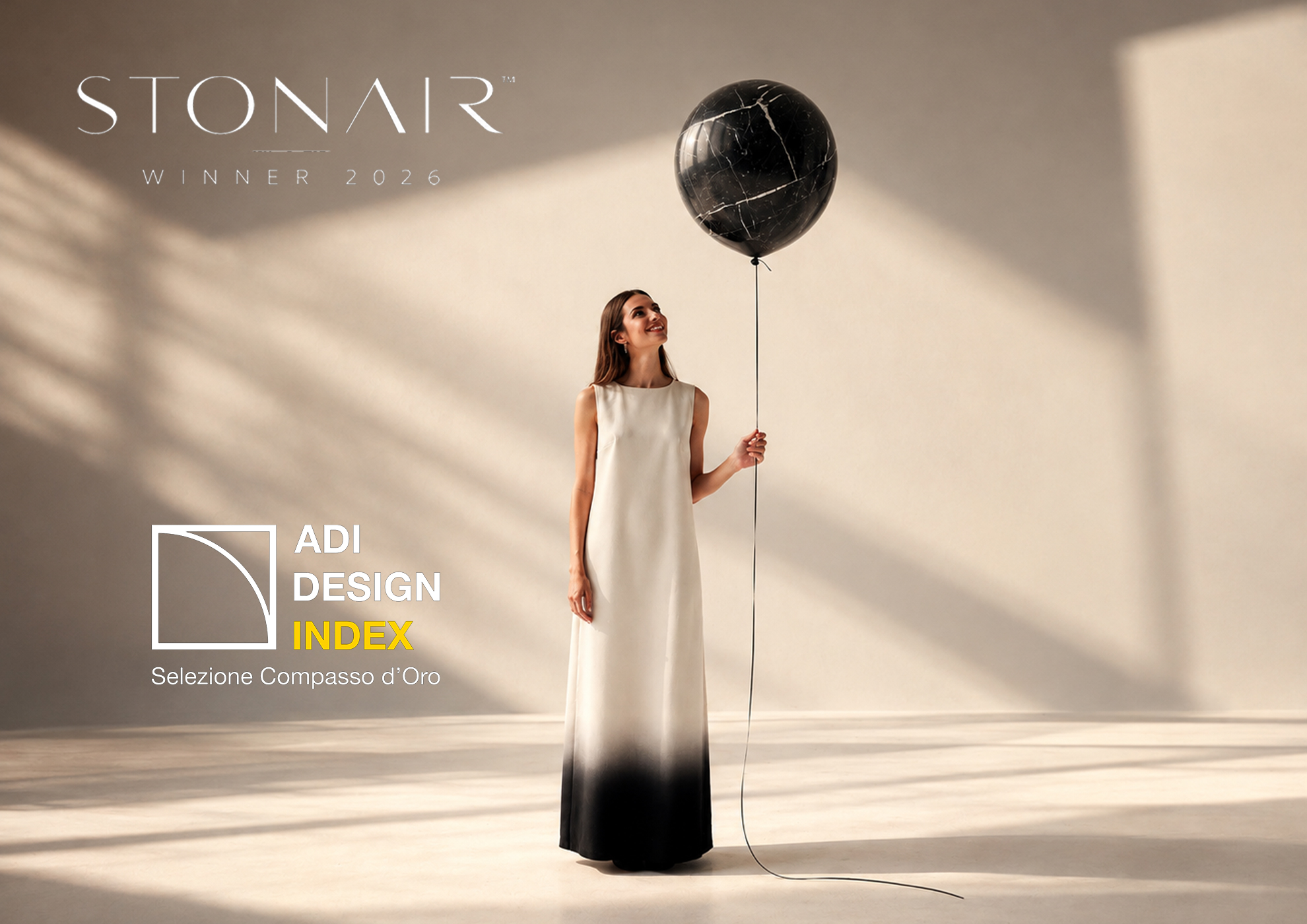
Some projects are born to meet a specific need, while others, through their evolution, come to suggest a new way of observing, designing, and interpreting material.
STONAIR™ belongs to this second category.
The surface system developed by Molteni Vernici has been officially selected for the ADI Design Index 2026, the annual publication through which the ADI Permanent Design Observatory identifies and presents the most significant projects in contemporary Italian design.
This selection represents one of the most prestigious recognitions for Made in Italy design research and officially nominates STONAIR™ for the ADI Compasso d’Oro 2027.
For Molteni Vernici, this result marks a fundamental milestone. It does not merely celebrate the aesthetic identity of a collection, but recognizes the value of a broader vision: transforming the surface from a simple finishing element into a design material capable of uniting perception, technology, manufacturing culture, and creative freedom.
A new interpretation of stone
Stone has always accompanied the history of architecture.
It is an ancestral material, a structural element, and a symbol of permanence. Its presence conveys solidity, authenticity, and continuity with the natural landscape. Its veins record the passage of time; its irregularities tell the story of pressures, sedimentations, and transformations that occurred over thousands of years.
However, the extraordinary expressive power of stone is accompanied by precise physical and design limitations: weight, thickness, rigidity, handling difficulties, installation complexity, and limited adaptability to certain geometries or substrates.
STONAIR™ was born from a radical question: is it possible to preserve the visual and sensory character of stone while simultaneously freeing it from its traditional constraints?
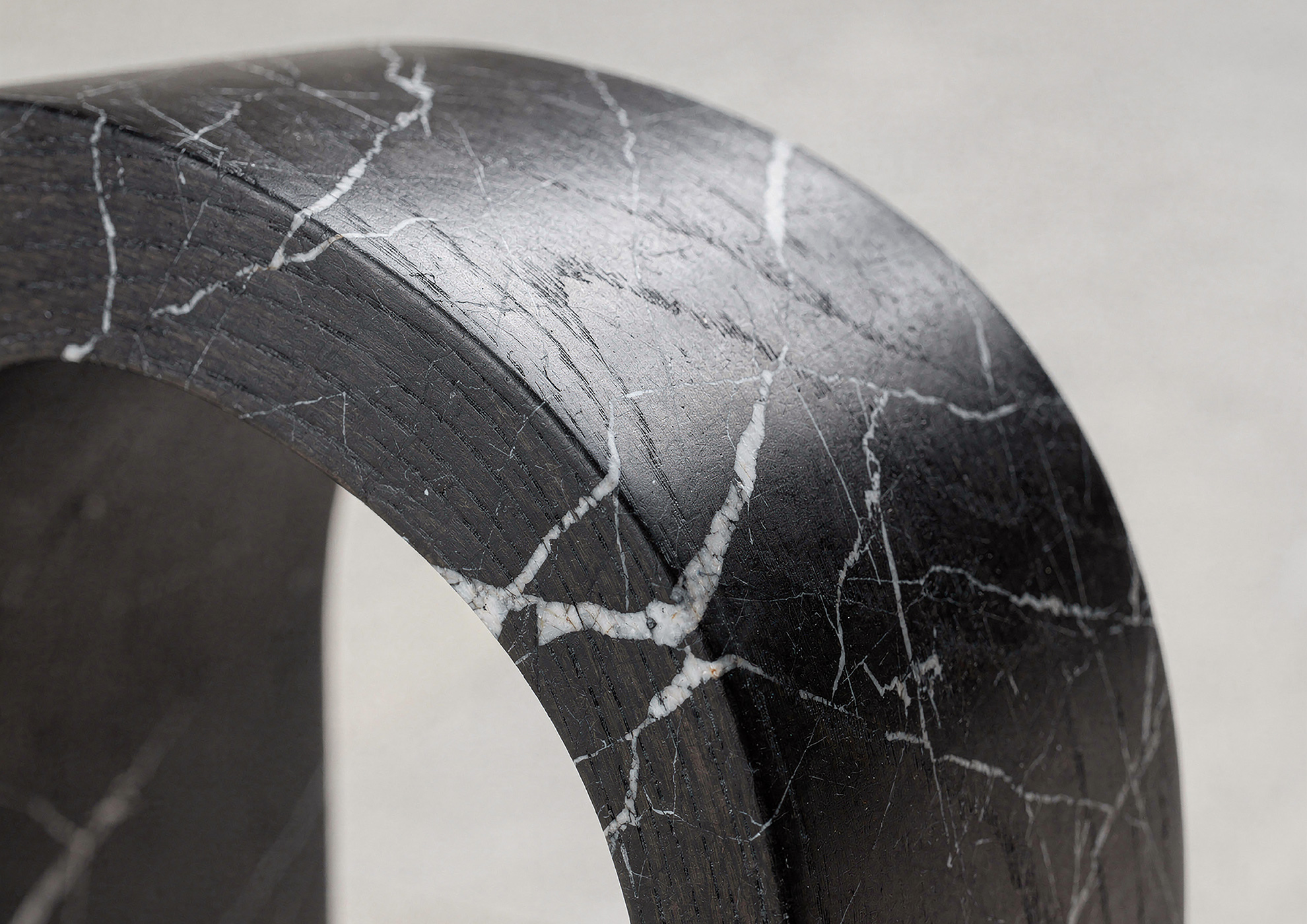
The answer developed by Molteni Vernici does not consist of a decorative reproduction of a texture. STONAIR™ does not simply aim to imitate a natural slab. The project interprets stone as a language, studying its depth, rhythm, discontinuity, chromatic density, and light behavior, translating these elements into a new surface system.
The result is a contemporary material that evokes a mineral presence without depending on the mass of the original material.
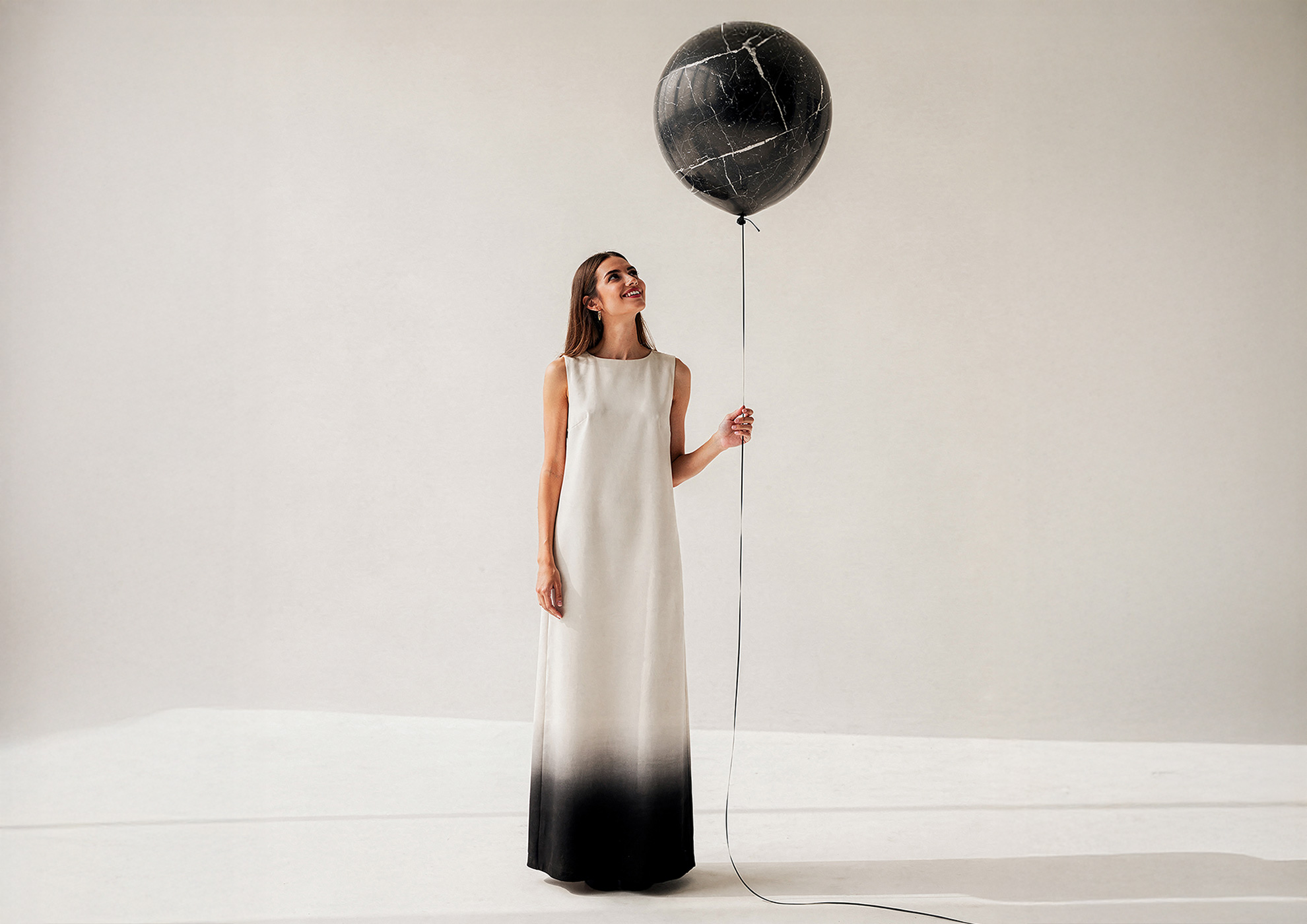
Lightness as a design value
In the STONAIR™ project, lightness is neither a side effect nor a simple functional advantage. It is the principle around which the entire relationship between material, substrate, and architecture is rethought.
Freeing stone from its weight means expanding the possibilities of design.
It means allowing the mineral language to enter areas where a traditional slab would be complex, invasive, or incompatible. It means conceiving surfaces, volumes, and furnishing elements without being necessarily constrained by the rigidity and mass of stone material.
From this perspective, STONAIR™ does not replace natural stone. It proposes a different design dimension.
Its identity stems from the ability to transfer the perception of material onto contemporary surfaces and objects, allowing designers to experiment with new proportions, combinations, and applications.
The surface thus becomes a space of freedom.
It can follow the identity of the object instead of imposing its own. It can engage in a dialogue with architecture, product, and interior design, maintaining an intense material presence while shedding the visual and physical weight normally associated with stone.
Twelve interpretations of nature
STONAIR™ is articulated through twelve different mineral inspirations.
These are not merely a sequence of color variations, but twelve distinct design identities. Each surface possesses its own balance of depth, movement, texture, light, and material.
The collection traverses different visual territories: deep stratifications, more uniform presences, graphic tensions, mineral vibrations, and chromatic variations that shift in relation to light and the observer's vantage point.
Each interpretation is designed to offer architects, designers, and planners not a closed catalog of effects, but a lexicon through which to build atmospheres.
The choice of surface thus becomes an integral part of the composition.
STONAIR™ can play a silent, architectural role or become the visual center of a project. It can complement different materials or introduce an intentional contrast. It can be viewed from afar as a compact presence and, upon closer inspection, progressively reveal its complexity.
This dual reading—immediate and close-up—is one of the most characteristic elements of the collection.
On one hand, the surface defines the overall volume. On the other, it invites the eye to linger on the details, variations, and material transitions that make every application deeply expressive.
Five layers of material research
At the heart of STONAIR™ is a construction organized into five layers.
This structure should not be interpreted merely as a technical sequence. Each step contributes to the formation of the surface's final identity.
Depth, color, movement, light response, and tactile perception emerge from the relationship between these different levels. No layer exists in isolation: each modifies and completes the one before it, contributing to a result that could not be achieved through a purely graphic or decorative solution.
It is precisely this layering that gives the surface an authentically material presence.
Light does not meet a flat image, but a complex composition. The variations do not simply appear drawn: they emerge from the very construction of the finish and the sensitivity with which it is applied.
The five layers also tell the story of the Molteni Vernici method.
A method in which chemical research, experimentation, color culture, and application expertise move forward together. Innovation is not separated from craftsmanship, because the quality of the surface is born precisely from the encounter between technical control and artisanal interpretation.
STONAIR™ therefore expresses an evolved form of Italian manufacturing: rigorous but not impersonally serial, technological but still capable of embracing the human touch, sensitivity, and knowledge of the material.
Beyond imitation
In the world of surfaces, the concept of imitation is often associated with the ability to visually replicate an existing material.
STONAIR™ chooses a different direction.
The project does not measure its value solely through photographic similarity to a natural stone. Its goal is to restore its perceptual intensity, transforming it into an autonomous language.
The difference is substantial.
A copy seeks to hide its own nature. An interpretation, on the other hand, builds a new identity starting from a recognizable reference.
STONAIR™ declares its own contemporaneity. It preserves the imagery of stone, but brings it into a surface designed to engage with current needs, forms, and scenarios.
It is a material that belongs to design, not simulation.
For this reason, every creation maintains its own individuality. The layering and the application gesture generate controlled variations that prevent the surface from turning into a mechanical and perfectly uniform repetition.
Irregularity becomes a value.
It is not a defect or a deviation, but a trace of the process through which the material was built. It is what allows light to move, color to acquire depth, and the surface to maintain a living relationship with the space.
Between industry and artisanal culture
Molteni Vernici develops STONAIR™ within a unique territory, where industrial research and artisanal culture are not considered opposing dimensions.
Industry ensures method, system repeatability, component study, and process control. Craftsmanship introduces sensitivity, the ability to read the substrate, and interpretation of the final result.
Quality is born from the dialogue between these two areas of expertise.
It is a balance deeply rooted in Italian manufacturing culture, particularly in the Cantù district, where knowledge of materials, furniture, and decoration has been passed down and evolved through generations of specialized companies and craftsmen.
In this context, the surface is not considered the final, accessory phase of production. It is part of the design from the very beginning.
Color, tactility, and light reflection can alter the perception of proportions, the character of a room, and the identity of an object. This is why the finish does not simply "dress" a pre-defined form: it helps determine its presence.
STONAIR™ brings this vision to a new level of maturity.
Mineral matter is reconstructed through chemical and application expertise, yet it retains the sensitivity inherent in processes where human intervention is an essential component of the result.
The surface as a design tool
Architects and designers today are faced with increasingly complex requirements.
Design must integrate beauty, performance, adaptability, and identity. It must meet technical constraints without sacrificing expressive power. Furthermore, it must be able to create recognizable experiences in a visual landscape characterized by growing uniformity.
In this scenario, STONAIR™ serves as a design tool.
It does not prescribe a form, nor does it establish a single way of being used. It offers a material grammar that can be interpreted in relation to scale, function, and context.
In high-end retail, it can help build immersive and distinctive spaces. In hospitality, it can introduce depth and character without weighing down the architecture. In residential projects, it can transform furnishings and surfaces into tactile, personal presences. In product design, it can open an unexpected dialogue between volume, technology, and natural imagery.
The same finish can take on a different character depending on the geometry, lighting, and materials it is paired with.
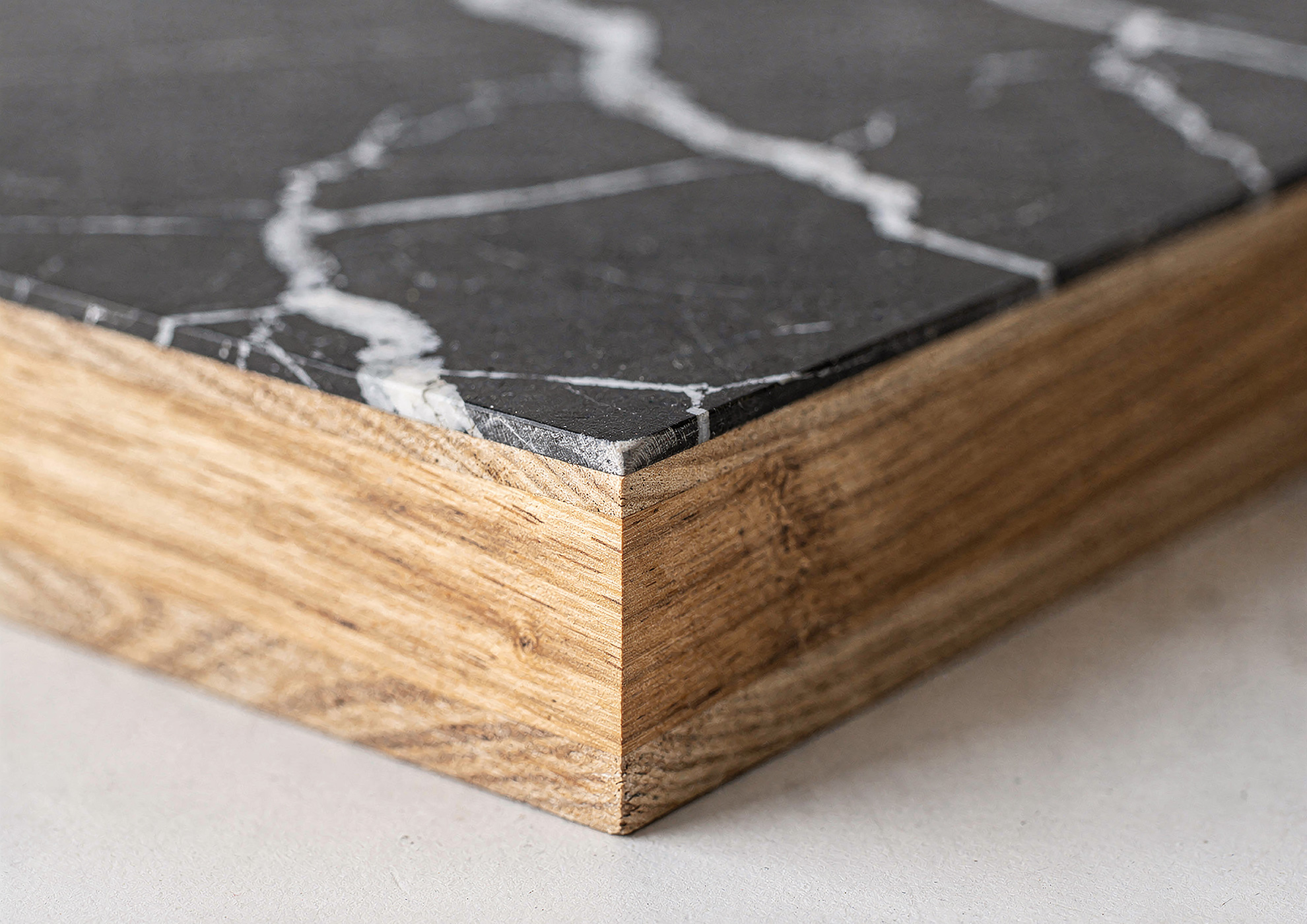
With metals and glass, it can generate contrasts between mineral density and reflection. With wood and fabrics, it can build a warmer, more sensory relationship. When placed in minimalist spaces, it can become the primary material statement; when used in more complex compositions, it can function as a connecting element.
The collection, therefore, does not offer a single answer, but a platform of possibilities.
ADI recognition
Selection for the ADI Design Index 2026 recognizes the overall value of this journey.
Each year, the ADI Permanent Design Observatory analyzes Italian production and identifies projects that express quality, innovation, and cultural relevance across various design disciplines.
Being included in the Index means being recognized as part of the research that is helping to define the present and future of Italian design.
For STONAIR™, this achievement holds special significance.
It confirms that a surface can be viewed not just as a technical product or decorative component, but as an authentic design project. A project in which material, function, production process, and aesthetic culture converge within a coherent vision.
The selection also makes STONAIR™ a candidate for the 2027 ADI Compasso d’Oro, continuing a path that places the system within one of the most important international traditions dedicated to design quality.
Established in 1954, the Compasso d’Oro has accompanied the evolution of Italian design, recognizing products and research capable of representing significant milestones in material and design culture.
Being a candidate means engaging with this history.
Not as a final destination, but as confirmation of the direction taken and as a responsibility toward the future of research.
A shared achievement
STONAIR™ is the result of a collective process.
It stems from initial insights but takes shape through trials, errors, testing, discussions, and continuous evolution. Each layer was observed not only for what it produced individually, but for how it modified the entire system.
The selection for the ADI Design Index 2026 therefore belongs to everyone who participated in the project: the research team, technicians, colorists, applicators, collaborators, and professionals who helped verify its possibilities.
It also belongs to a corporate culture that continues to believe in long-term research, even when the final result is not immediately predictable.
Innovating material takes time.
It requires the willingness to abandon seemingly correct solutions in order to seek better ones. It requires the ability to listen to the surface, understand its reactions, and transform an aesthetic intuition into a concretely applicable system.
This method has always accompanied the work of Molteni Vernici.
Every collection is born from the desire to take color and finish beyond their conventional meaning. Not simply to coat, but to bestow identity. Not to standardize, but to make recognizable. Not to replicate what exists, but to imagine what is still missing.
A new chapter for Molteni Vernici
The inclusion of STONAIR™ in the ADI Design Index 2026 marks a new chapter in the Maison's history.
This achievement strengthens the relationship between Molteni Vernici and the international world of architecture, design, and high-end decoration, while remaining deeply rooted in the company's origins and its expertise in specialty coatings.
From this expertise comes the ability to see surfaces as an open territory.
A place where chemistry and beauty can coexist; where technical precision supports emotion; and where innovation only gains meaning when it offers the designer new freedom.
STONAIR™ interprets this philosophy through stone, but the heart of the project lies in transformation.
Transforming mass into lightness.
Transforming natural references into a contemporary language.
Transforming finishes into design material.
Transforming five layers into a depth that engages both sight and touch.
It is through these transitions that STONAIR™ builds its identity.
The material of the future
The future of surfaces will not be determined solely by their ability to look new.
It will be defined by the possibility of establishing smarter relationships with objects, spaces, production processes, and the people who inhabit them.
Surfaces must offer character without limiting the design. They must be technologically advanced yet sensorially significant. They must allow for personalization and freedom, ensuring that technical complexity does not become expressive rigidity.
STONAIR™ was created with this perspective in mind.
Its value lies not in a single feature, but in the balance between different elements: presence and lightness, nature and research, control and uniqueness, technology and craftsmanship.
The selection for the ADI Design Index 2026 highlights this balance and recognizes its contribution to the contemporary design landscape.
As of today, STONAIR™ officially joins the path of Italian design selected by ADI.
2027 will mark a new milestone with the nomination for the Compasso d’Oro. But the significance of this moment is already clear: a project born from surface research is now recognized as part of Italian design culture.
Twelve mineral inspirations.
Five layers of material.
Lightness as a principle.
The surface as a language.
STONAIR™ does not simply reproduce stone. It liberates its identity, transforming it into a new possibility for design.
A surface capable of preserving the memory of nature while simultaneously imagining its future.